AI Tools
Usefulness of AI and Risk
By Admin • 11/3/2026 • 1 min read
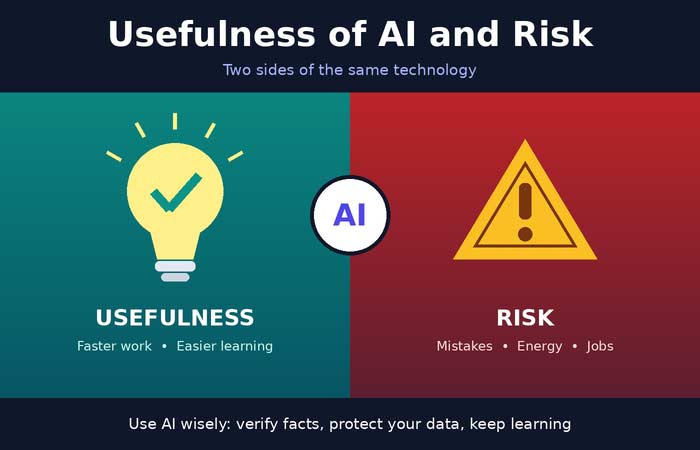
AI can make work faster and help beginners perform better, but it also makes mistakes, uses a lot of electricity and is changing the job market. This article looks at both sides with data from published studies and reports, and ends with simple rules for using AI wisely.
Affiliate disclosure: This article contains eligible affiliate links. Dewdora may earn a commission at no extra cost to you.
AI tools are now part of daily life, used for writing, studying, customer support, coding and research. Both the excitement and the fear are real, so it helps to look at what the evidence shows. Below are two benefits and three risks, each backed by a study or report.
How AI is useful
1. It can make people more productive
The strongest real-world evidence comes from a study by researchers at Stanford and MIT. They tracked 5,179 customer support agents after an AI assistant was introduced. Access to the tool raised productivity, measured by issues resolved per hour, by 14% on average. The gains weren’t spread evenly. Novice and low-skilled workers improved by 34%, while experienced and highly skilled workers saw minimal impact. AI assistance also improved customer sentiment and increased employee retention. Generative AI at Work +2
One lead researcher said the real-world gains were less dramatic than in earlier lab experiments, likely because workplace processes are more complex than one-off tasks. The study covers one company and one job type, so it shows AI can help, not that it helps everywhere by the same amount.
It can help people learn faster
The same study found that the AI model spreads the best practices of more able workers and helps newer workers move down the experience curve. In everyday terms, AI can act like a coach who shares what top performers do. That is why it can help students, freelancers and beginners.
It may create new jobs
The World Economic Forum surveyed more than 1,000 large employers. Its 2025 report projects that by 2030, trends including technology will create 170 million new jobs and displace 92 million, a net increase of 78 million. Job creation is only half the story, as the risks section explains.
The risks of AI
AI makes mistakes and sounds confident
AI can produce false information, which researchers call “hallucination.” A Stanford and Yale study tested well-known AI legal research tools. Even though these tools are designed to reduce errors, the researchers found they each hallucinate between 17% and 33% of the time, and that the providers’ claims of avoiding hallucinations were overstated. A summary of the study reports that the general-purpose GPT-4 hallucinated 43% of the time in the same test.
A related pattern is AI agreeing with you even when you’re wrong. The study identified this “sycophancy” as one of four major error types. The study tested tools from 2024, and newer versions have likely changed. A later report cited in the same summary found that ChatGPT matched legal AI tools in accuracy in 2025, so error rates keep shifting. The lesson doesn’t change: don’t trust important answers without checking.
AI uses a lot of electricity
Training and running AI requires large data centers. The International Energy Agency (IEA) projects that electricity demand from data centres worldwide will more than double by 2030, to around 945 terawatt-hours, slightly more than Japan’s entire electricity consumption today. For context, data centres were about 1.5% of the world’s electricity consumption in 2024. The IEA also notes that data centres account for around one-tenth of global electricity demand growth to 2030, less than industrial motors, air conditioning or electric vehicles. ai is set to drive surging electricity demand from data centres while offering the potential to transform how the energy sector works +2
The impact is uneven. In advanced economies, data centres account for more than 20% of demand growth to 2030. The IEA also says the rise in emissions will be small in the context of the overall energy sector and could potentially be offset by emissions reductions enabled by AI, if adoption is widespread. A fair summary is that the energy cost is real and growing, but it is not the largest source of new electricity demand.
AI will disrupt jobs
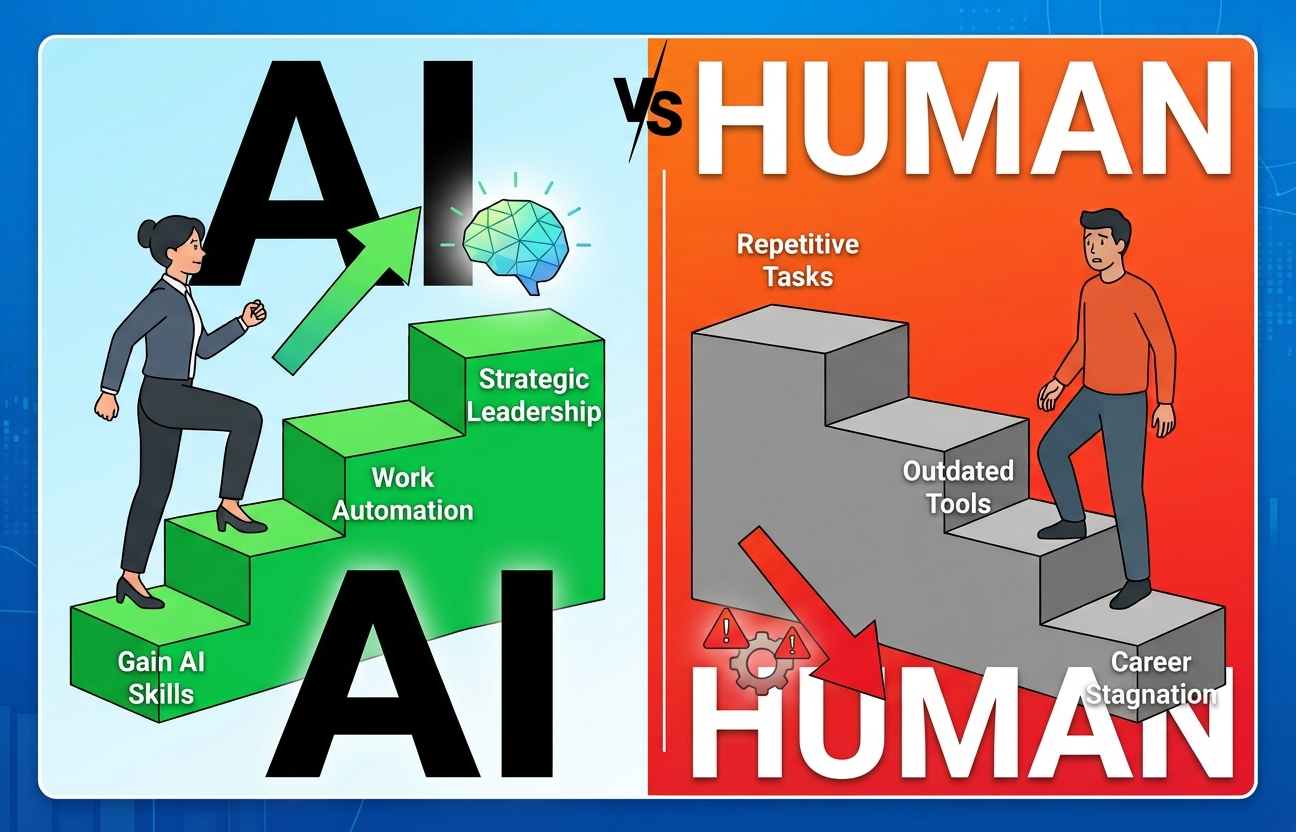
The same WEF report that projects 78 million net new jobs also warns of heavy disruption. Job disruption will equate to 22% of jobs by 2030. A net gain doesn’t help the specific person whose role disappears, and the new jobs may need different skills. This is why the report stresses upskilling.
Other risks
AI can also be misused to spread false information, and sharing personal data with AI tools can create privacy risks. I haven’t cited a specific study for these two in this article, so add a source if you plan to publish a claim with numbers.
How to use AI wisely
Treat AI as a helper, not an authority. Check important facts, numbers and citations against original sources.
Don’t paste in sensitive information. Avoid passwords, private documents and personal details unless you know how the tool handles data.
Give clear instructions and check the output. Be especially careful if your question contains a wrong assumption, since AI may go along with it.
Use AI to learn, not just to copy. Ask it to explain its steps so your own skills grow.
Keep building skills AI can’t easily replace. Judgment, communication and learning new tools matter more as jobs change.
Use it with purpose. Pick tasks where it saves real time, which also keeps unnecessary energy use down.
Conclusion
AI is neither a miracle nor a disaster. Real-world data shows it can raise productivity and help beginners. The same research shows it can be wrong, it needs a lot of power, and it will disrupt jobs. Verify what matters and keep learning, and you can get the benefits while limiting the risks.
References
Brynjolfsson, E., Li, D., & Raymond, L. R. (2025). Generative AI at Work. The Quarterly Journal of Economics, 140(2), 889-942. Working paper version: NBER Working Paper 31161. DOI: 10.3386/w31161. NBER
Magesh, V., Surani, F., Dahl, M., Suzgun, M., Manning, C. D., & Ho, D. E. (2025). Hallucination-Free? Assessing the Reliability of Leading AI Legal Research Tools. Journal of Empirical Legal Studies. DOI: 10.1111/jels.12413. Yale ISPS
International Energy Agency (2025). Energy and AI. IEA executive summary; IEA news release
World Economic Forum (2025). Future of Jobs Report 2025. Press release
Stanford Digital Economy Lab coverage of the productivity study, quoted by the researchers: First Real-World Study Showed Generative AI Boosted Worker Productivity by 14% (a republished copy of the original news article).
LLRX (2026). What the Science Says About Hallucinations in Legal Research. Link